
Cloud Operations
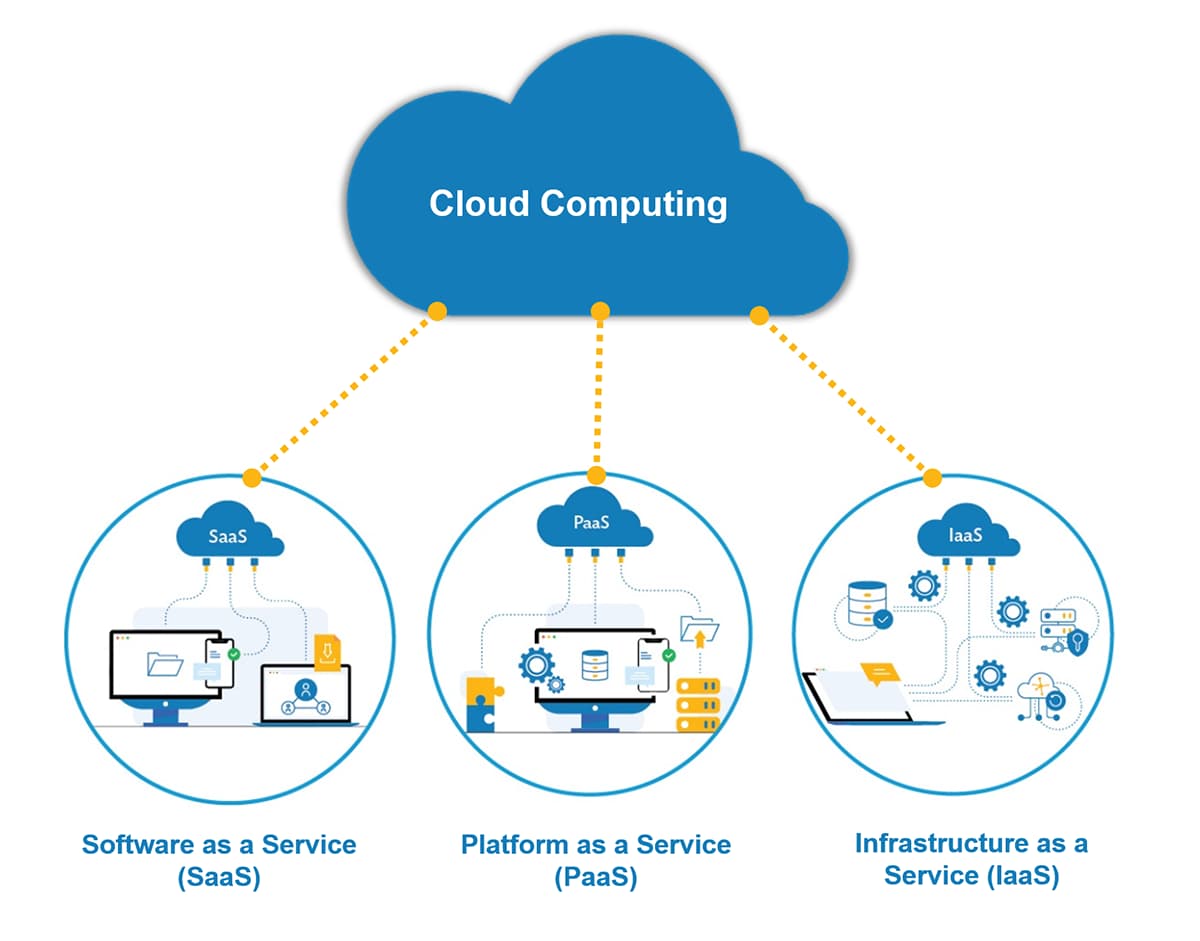
Cloud Services
Service Models
Three service models cover almost every cloud offering:
Infrastructure as a Service (IaaS)
IaaS hands you the basic building blocks — virtual machines, storage, networking — and you build and run your own applications on top. Example: spin up a VM and install and configure a web server on it yourself.
Platform as a Service (PaaS)
PaaS gives you a platform to develop, deploy, and manage applications, with a set of pre-configured tools and services. Example: deploy a web application without ever provisioning or patching the VM underneath it — the PaaS provider handles that layer.
Software as a Service (SaaS)
SaaS gives you a ready-made application, usually for a monthly subscription. Example: using a hosted email service instead of running mail server software yourself.
Benefits
- Scalability — scale resources up or down to match demand, instead of over- or under-provisioning.
- Reliability — cloud providers run multiple data centers across regions, which is hard to match on your own.
- Security — providers invest heavily in securing their data centers and the data stored in them.
Challenges
- Security — provider security measures reduce but never eliminate the risk of a breach.
- Compliance — you still need to verify your usage meets every regulation that applies to your data.
- Vendor lock-in — deep reliance on one provider's specific services makes switching providers expensive later.
Cloud Providers
The Big Players
Service Names Differ By Provider
Learning one provider's specific service names doesn't automatically transfer to another — know the mapping before you commit an architecture to a specific vendor's terminology:
| Service Model | AWS | Azure | Google Cloud |
|---|---|---|---|
| IaaS | EC2 | Virtual Machines | Compute Engine |
| PaaS | Elastic Beanstalk | App Service | App Engine |
| SaaS | AWS WorkMail | Microsoft 365 | Google Workspace |
Smaller, More Affordable Alternatives
A newer wave of smaller, more agile providers offers more affordable cloud service — worth investigating if you're a startup or an individual watching costs:
| Provider | Known For |
|---|---|
| DigitalOcean | Affordable pricing, developer-focused. |
| Linode | Affordable pricing, developer-focused. |
| Vultr | Low latency, wide configuration options. |
| Scaleway | European-based, affordable for EU businesses. |
| UpCloud | Low latency, focused on high availability. |
Data Centers
A data center is a physical facility that concentrates computer systems, storage, and telecommunications infrastructure. In cloud computing, providers own and operate these facilities to store data, run applications, and deliver services — secured with controlled access, redundant power and cooling for 24/7 operation, and layered protection (firewalls, intrusion detection, encryption).
A data center's location matters directly to businesses with data-residency requirements: choosing a provider with a data center in the right region can be a compliance necessity, not just a latency optimization.
Cloud Roles
Platform Engineer
Owns the design, development, and maintenance of the platform that supports an organization's applications — the underlying infrastructure (servers, storage, networking) plus the middleware and tools used to build and deploy on top of it.
TechOps Engineer
Owns the operational side of that same platform: monitoring for performance and availability issues, troubleshooting, and deploying new features safely.
| Role | Responsibilities | Core Skills |
|---|---|---|
| Platform Engineer | Design, develop, and maintain the platform | Programming, networking, system administration |
| TechOps Engineer | Monitor, troubleshoot, deploy new features | Incident management, change management, release management |
In short: platform engineers own the what — the platform's architecture and features. TechOps engineers own the how — keeping it running and shipping changes safely. Both roles are necessary; neither replaces the other.
Other Cloud Roles
| Role | Focus |
|---|---|
| Cloud Architect | Designs cloud-based solutions to meet stakeholder requirements; needs deep knowledge of cloud technology options. |
| Cloud Developer | Builds and deploys applications on cloud platforms, working with architects to match the design. |
| Cloud Operations Engineer | Runs day-to-day operations: monitoring, troubleshooting, deploying — the same craft as a TechOps engineer, cloud-specific. |
| Cloud Security Engineer | Designs and enforces security policy, monitors for threats, and responds to incidents. |
| Cloud Support Engineer | Provides technical support directly to cloud users. |
Which of these roles a given organization needs depends on its size and complexity — but every one of them plays a part in successfully running a cloud platform at scale.